
In the Curator’s Words: Why this series matters
“In the Curator’s Words” is a San Diego Union-Tribune Arts & Culture series created and shaped by Michael James Rocha, a longtime voice in San Diego’s cultural journalism. Developed as a way to slow down the conversation around exhibitions, the series takes a critical look at current shows through the eyes of the curators—the professionals closest to the objects, the stories, and the interpretive choices that make an exhibition truly resonate. Already, the series has covered more than a dozen regional exhibitions, spanning art, history, science, and cultural institutions across San Diego County.
Rocha brings to the series a rare blend of institutional knowledge and editorial perspective. He currently serves as Digital Creative Director at the San Diego Union-Tribune, following years as a senior arts and culture writer and critic for the paper. Across his roles, he has consistently elevated arts coverage—bridging visual art, history, design, and community storytelling—while expanding how cultural journalism lives online and reaches new audiences.
At its core, In the Curator’s Words underscores the essential role curators play in shaping public understanding. Curators do far more than select artworks: they are researchers, translators, stewards, and storytellers, connecting collections to community, placing objects in social and historical context, and asking—and answering—the vital “why now?” questions that help visitors see with fresh perspective.
Full access to these stories may require a San Diego Union-Tribune subscription—and it’s a worthwhile investment in outstanding arts and culture journalism that covers our region in depth.
As Bob Lehman, Executive Director of San Diego ART Matters, notes:
“This kind of thoughtful cultural journalism is essential to a healthy arts ecosystem. ‘In the Curator’s Words’ elevates the work of our museums, honors the voices of artists, and shines a light on the critical role curators play in shaping how our communities understand art, history, and culture. It helps audiences see exhibitions not just as displays, but as living conversations—and that visibility matters deeply for our region.”

In the Curator’s Words: Maritime Museum dives deep into San Diego’s commercial fishing industry
Set on San Diego Bay, this installment dives into “Harvesting the Ocean,” the Maritime Museum of San Diego’s ongoing exhibition chronicling commercial fishing—from the Chinese immigrant communities arriving in the late 1850s to the Italians, Portuguese, Mexicans, and today’s multicultural fleet. Read the full story here.
Rocha speaks with Kevin Sheehan (collections manager, curator, archivist, and librarian), underscoring how maritime collections preserve not only artifacts, but labor history, migration, and the cultural fabric of a working waterfront.
In the Curator’s Words: Riding the wave of California’s surfing culture
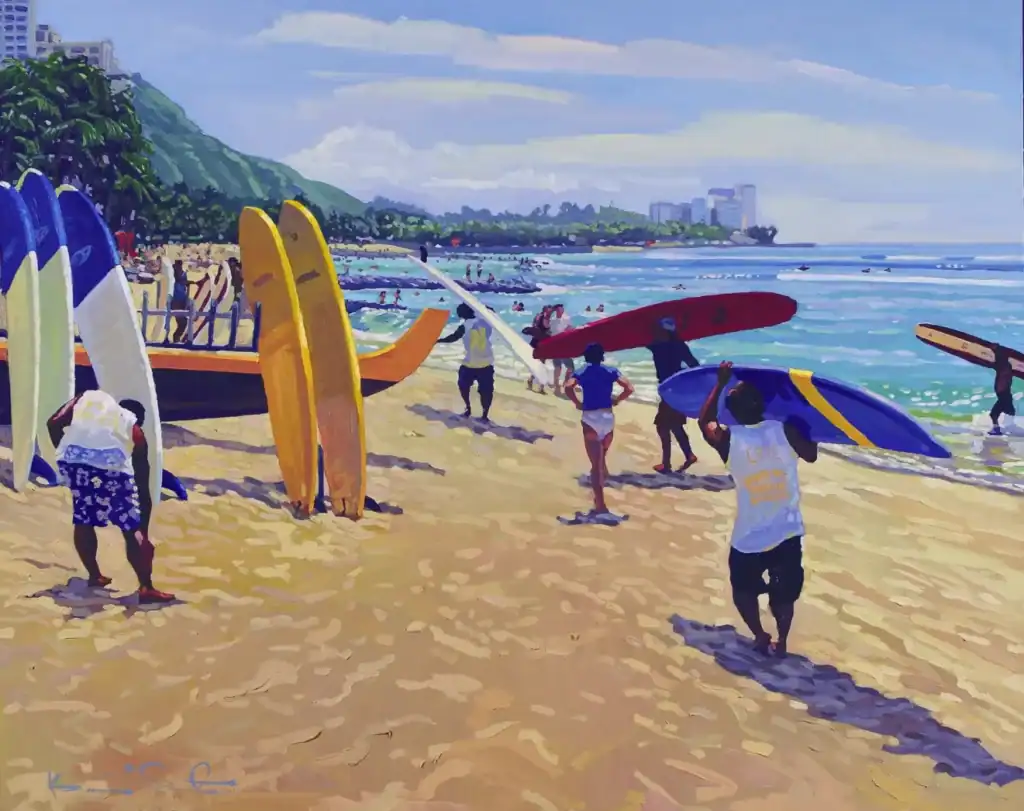
In this installment of In the Curator’s Words, Michael James Rocha turns to the Oceanside Museum of Art and the California Surf Museum for a closer look at Surf Art: Exploring Southern California’s Coastal Culture, a groundbreaking dual-venue exhibition and the first partnership of its kind for both institutions. Read the full story here.
The collaboration feels almost inevitable. Surfing has long shaped Southern California’s identity, and when the California Surf Museum—located less than a quarter mile away—approached Oceanside Museum of Art with the idea of working together, the answer was an easy “yes.” Katie Dolgov, Director of Exhibitions and Collections at Oceanside Museum of Art, reflects on the partnership and the deeper cultural significance of surfing in California, framing it not just as a sport, but as a creative, social, and artistic force.
Through the curatorial lens, the exhibition connects surf culture to visual art, design, and regional history—revealing how waves, coastlines, and communities have inspired generations of artists and helped shape California’s cultural imagination.
In the Curator’s Words: In a landmark exhibition, Timken revisits 16th-century portraiture
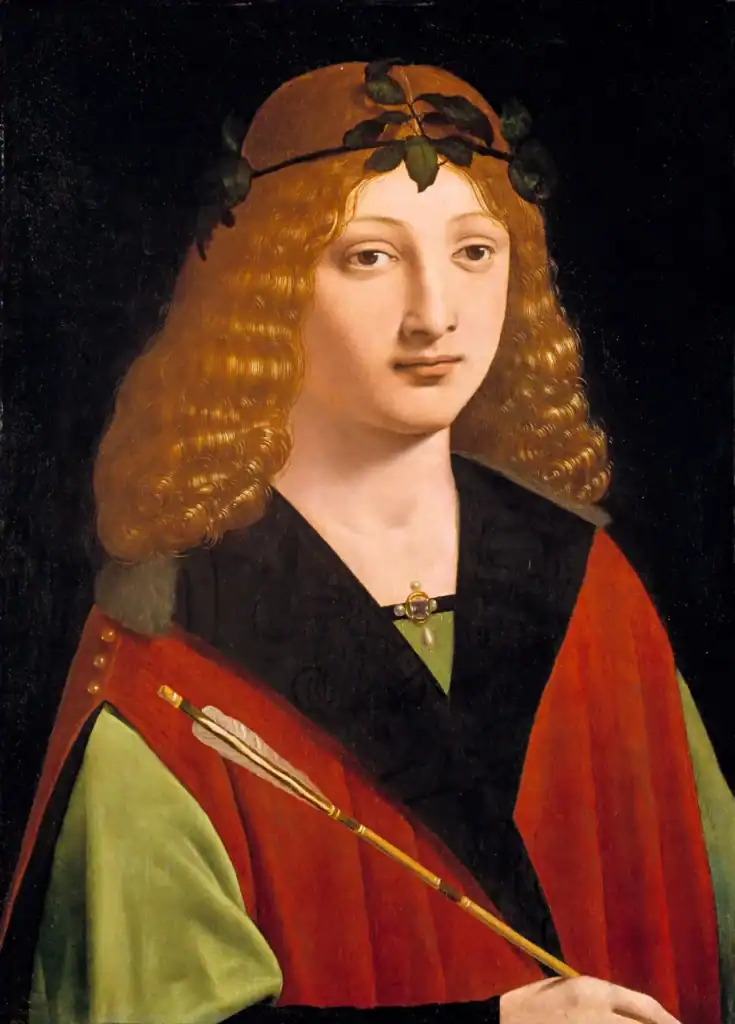
Rocha’s latest dispatch moves to the Timken Museum of Art, where the series frames portraiture not as static “old master” imagery, but as living cultural evidence—of power, identity, belief, and representation in the 1500s. Read the full story here.
This piece invites readers to look closer: at what portraits say, what they hide, and how a museum can reanimate historical works for contemporary audiences. Derrick Cartwright, director of curatorial affairs for the Timken Museum of Art and a professor at the University of San Diego, has a way of demystifying art and making it more accessible.

In the Curator’s Words: Birch Aquarium dives deep in the waters with “Meditation Ocean”
This feature explores “Meditation Ocean: Aquarius Reef Base” curated by artist and diver Hope Ginsburg at Birch Aquarium, approaching the exhibition as both experience and idea—how the sensation of water can shape reflection, calm, and curiosity. Read the full story here.
Through the curator/exhibits lens, the article highlights how interpretive choices (sound, pacing, visuals, narrative) can turn a visit into something closer to a guided reset.
In the Curator’s Words: Da Vinci takes flight at San Diego Air & Space Museum
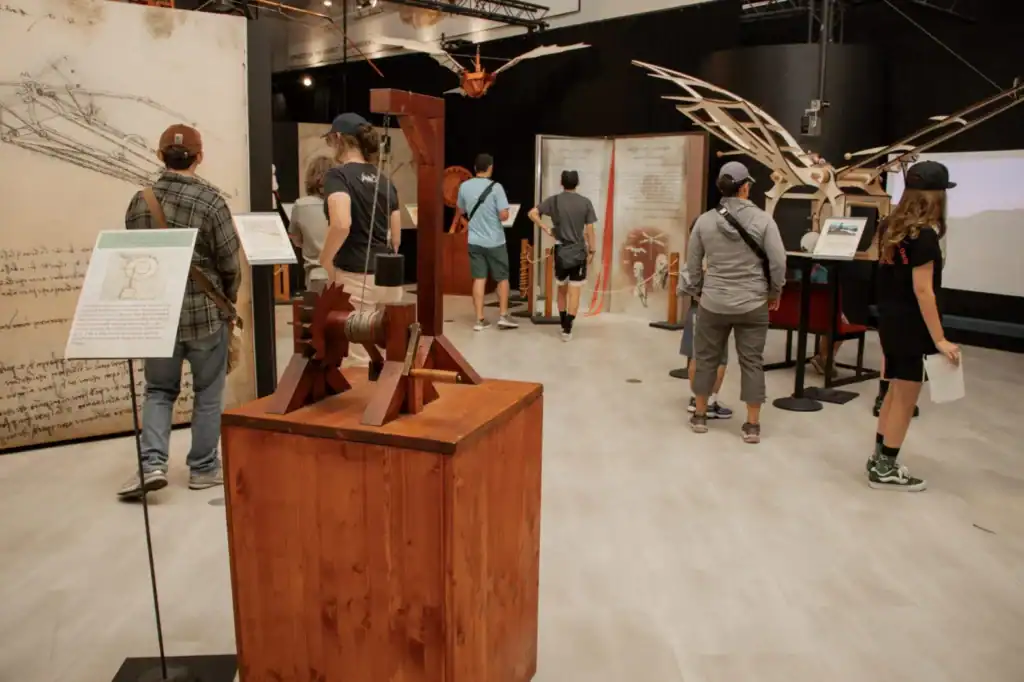
Here, the series lands at the San Diego Air & Space Museum to examine flight not only as engineering, but as imagination made tangible—using Leonardo da Vinci as a bridge between art, invention, and human ambition. Thomas Rizzo, the company’s director of traveling exhibitions, answers some questions about “Da Vinci’s First Flight,” which features more than 30 large-scale replicas of da Vinci’s flying machines, including a life-sized hang glider. Read the full story here.
It’s a great example of how “In the Curator’s Words” makes exhibition-making visible: the curatorial “how” behind what the public gets to see.

In the Curator’s Words: Art from the front lines, in bold strokes at Coronado Museum
This installment centers “Art from the Front Lines” at the Coronado Historical Association, connecting art to lived experience and historical record—especially where service, conflict, and witness intersect. Vickie Stone, the museum’s curator of collections, talks about how the exhibit came to be and how the pieces were chosen to commemorate a milestone anniversary. Read the full story here.
With the curator’s framing, the work becomes more than imagery: it’s documentation, interpretation, and a humanizing lens on history.
preserve not only artifacts, but labor history, migration, and the cultural fabric of a working waterfront.

In the Curator’s Words: Chicano artist Ramsés Noriega and the dawn of the Chicano Movement
At the Chicano Park Museum and Cultural Center, Rocha spotlights an exhibition that situates Ramsés Noriega within the political and artistic currents that shaped the Chicano Movement—emphasizing dual identity, reflection, and resistance. Rafael Barrientos Martinez has curated a landmark exhibit, titled “Fragmentos Del Barrio,” in Barrio Logan, where the 81-year-old Noriega, who lives in Los Angeles, is in the spotlight at the Chicano Park Museum and Cultural Center. Read the full story here.
The curator’s voice is essential here: it’s what ties individual works to community memory, movement history, and the ongoing work of cultural self-definition.

In the Curator’s Words: At SDMA, exploring the work of sculpting giant Eduardo Chillida
Rocha’s SDMA entry captures the scale—and intimacy—of Eduardo Chillida, describing an exhibition of major works across materials (iron, stone, wood, and more) and positioning Chillida’s practice as both monumental and deeply poetic. SDMA’S Associate Curator of Modern & Contemporary Art, Rachel Jans, talks about the Balboa Park museum’s newest exhibit, “Eduardo Chillida: Convergence,” which is on view until February. The exhibition features more than 85 works in iron, stone, wood and other materials by the late Spanish artist.
It’s also a reminder of what curators do best: provide the interpretive “handles” that help audiences meet challenging work with confidence and curiosity.
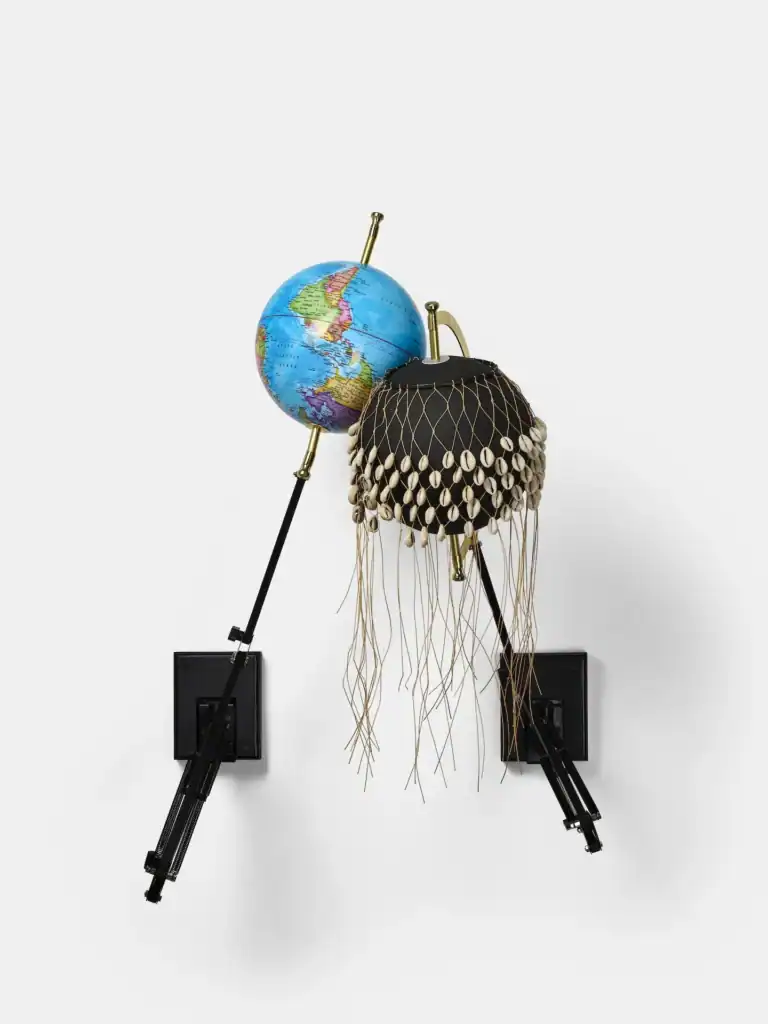
In the Curator’s Words: At the Athenaeum, Johannesburg-based artist Nolan Oswald Dennis explores the concept of territory
In this installment of In the Curator’s Words, Michael James Rocha turns to the Athenaeum Music & Arts Library in La Jolla for a closer look at Demonstrations (i), a new exhibition by Zambia-born, Johannesburg-based artist Nolan Oswald Dennis, presented in partnership with INSITE, the binational organization rooted in San Diego and Tijuana. The exhibition marks Dennis’ fourth solo show of the year, following presentations in Cape Town, New York, and London. In conversation with the curatorial framing, the exhibition situates Dennis’ interdisciplinary practice—spanning drawings, diagrams, 3D models, language, and poetry—within geological and planetary systems, African and diasporic relationships to land and cosmos, and anti-colonial political structures. Andrea Torreblanca, chief curator and editor for INSITE, talks about the exhibit, which is on display through Jan. 17.
It highlights the vital role curators play in shaping meaning—translating complex ideas into accessible entry points that empower audiences to engage deeply and thoughtfully.

In the Curator’s Words: Bonita Museum brings awareness to missing and murdered Indigenous women
In this installment of In the Curator’s Words, Michael James Rocha turns to the Bonita Museum & Cultural Center for a powerful examination of how museums use art to educate, move, and call communities to awareness. The exhibition, Walking in Beauty: Life as Ceremony, confronts the crisis of missing and murdered Indigenous women through a curatorial lens that centers respect, remembrance, and cultural continuity. Viscarra and Heather Gallana, the museum’s Indigenous Cultures Educator, took some time to talk about the exhibition, which has been at Centro Cultural de la Raza in San Diego, the Owens Valley Paiute-Shoshone Cultural Center in Bishop and art institutions in Montana, South Dakota and Oklahoma. Read the full story here.
The exhibition underscores the museum’s role as both a cultural steward and a space for reflection—using art and ceremony to elevate voices too often marginalized or silenced. Through the curator’s perspective, the exhibition reveals how intentional storytelling and community-rooted interpretation can transform museum spaces into sites of learning, empathy, and action.

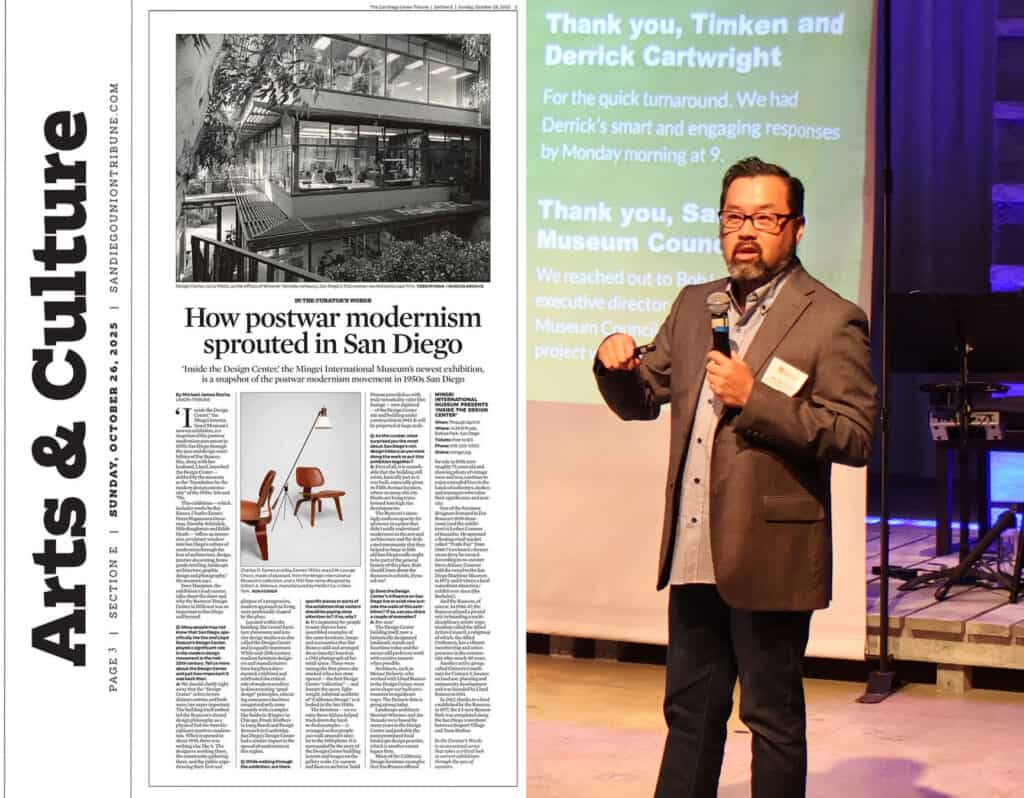
In the Curator’s Words: How postwar modernism took root in San Diego
In this edition of In the Curator’s Words, Michael James Rocha explores Inside the Design Center, the Mingei International Museum’s exhibition tracing the rise of postwar modernism in San Diego through the vision of Ilse Ruocco and her husband Lloyd. Set in the 1950s, the exhibition reveals how the Ruoccos’ Design Center helped shape the region’s modern design identity, serving as what the museum describes as the “foundation for the modern design community” that flourished through the 1950s, ’60s, and ’70s. Read the full story here.
Through the curator’s lens, the exhibition reframes local design history—highlighting how forward-thinking aesthetics, materials, and philosophies introduced during the postwar period continue to influence San Diego’s creative landscape today.
storytelling and community-rooted interpretation can transform museum spaces into sites of learning, empathy, and action.
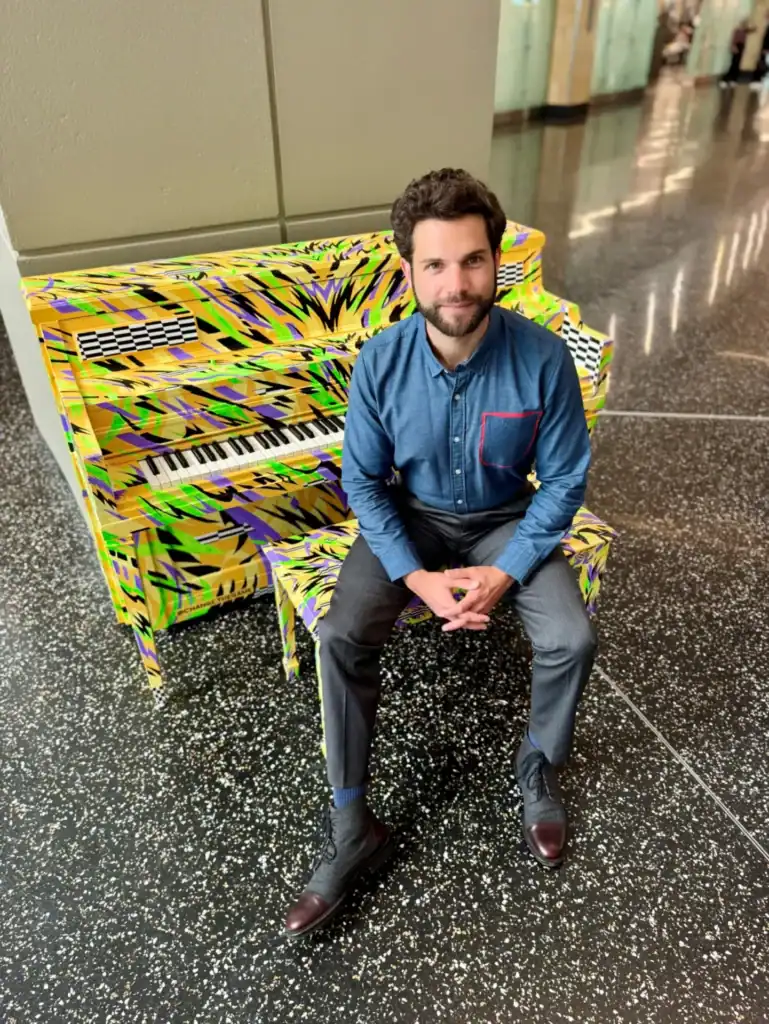
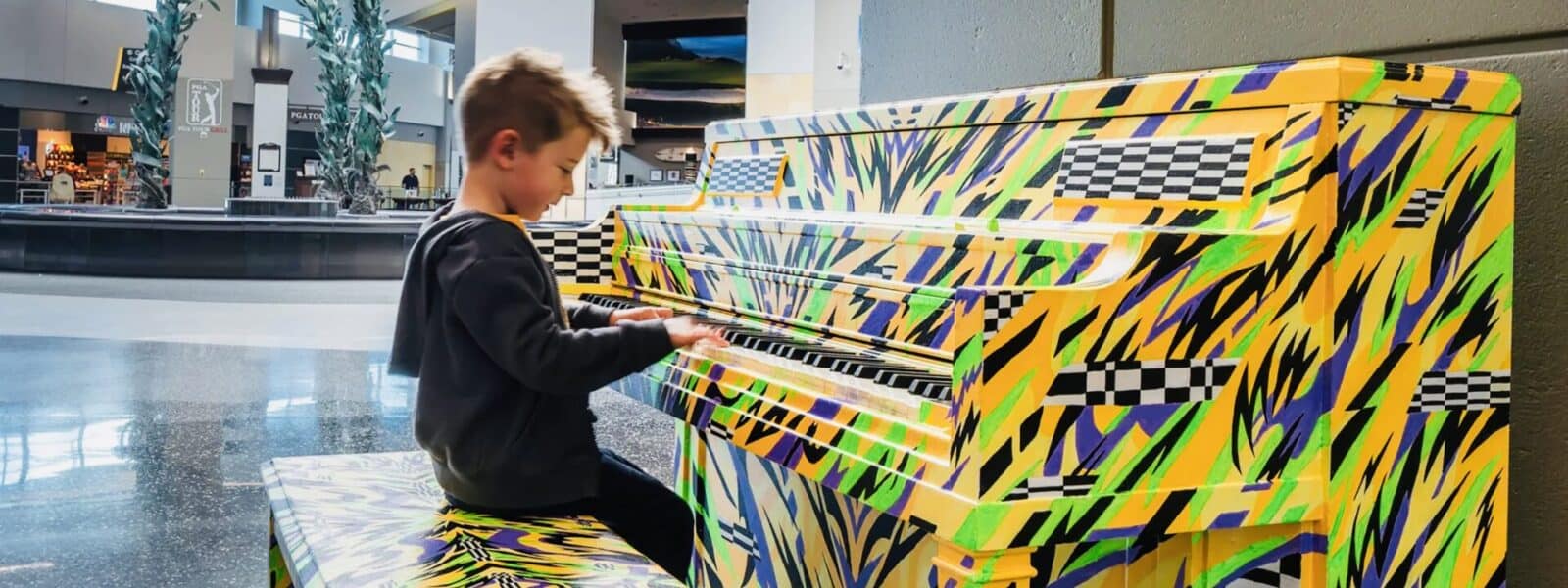
In the Curator’s Words: At San Diego International Airport, “Mirror Mirror” explores light, color, and space
In this edition of In the Curator’s Words, Michael James Rocha turns to an unexpected but highly public cultural venue: San Diego International Airport’s Terminal 2. The exhibition, Mirror Mirror, curated by Daniel Dennert, Curator and Arts Program Manager at San Diego International Airport, transforms the airport from a place of transit into a site of reflection, curiosity, and discovery. Read the full story here.
On view through 2025, Mirror Mirror features works by 16 artists from San Diego, Tijuana, and Los Angeles, drawing inspiration from Southern California’s Light and Space movement while reimagining its ideas for a contemporary, screen-saturated world. Dennert describes airports as places of waiting and transition—moments that the exhibition intentionally reframes through light, reflection, illusion, and sensory surprise. Viewers may encounter warped reflections, shifting colors, or artworks activated by sound, each inviting a pause and a new way of seeing.
Through a curatorial approach rooted in accessibility, nearly half of the San Diego International Airport Arts Program artworks are located in public, pre-security areas, welcoming both travelers and local visitors alike. As Dennert notes, the goal is connection—creating a memorable impression of San Diego’s creative community for everyone passing through, whether arriving, departing, or simply stopping by to experience art in a public space.
All of these “In the Curator’s Words” stories are saved on Muck Rack, a trusted platform used by journalists worldwide to curate an online portfolio of their published work, track coverage, and make it easy for readers (and editors) to find their latest articles in one place. You can read the full In the Curator’s Words series—along with Rocha’s other award-winning reporting and criticism—on his Muck Rack page, and follow his newest stories as they appear in the San Diego Union-Tribune.
About Michael James Rocha
Michael James Rocha is the Digital Creative Director at The San Diego Union-Tribune and a verified journalist on Muck Rack. His work spans arts and entertainment, metro San Diego, and more, with bylines that also appear beyond the Union-Tribune across major outlets. Rocha is also recognized for award-winning work, including honors from the San Diego Press Club.